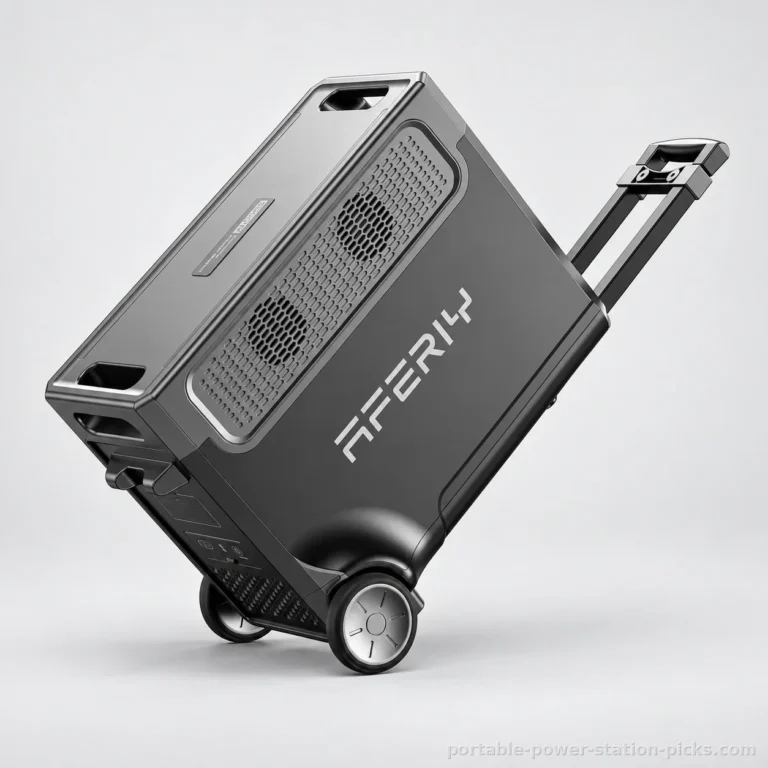
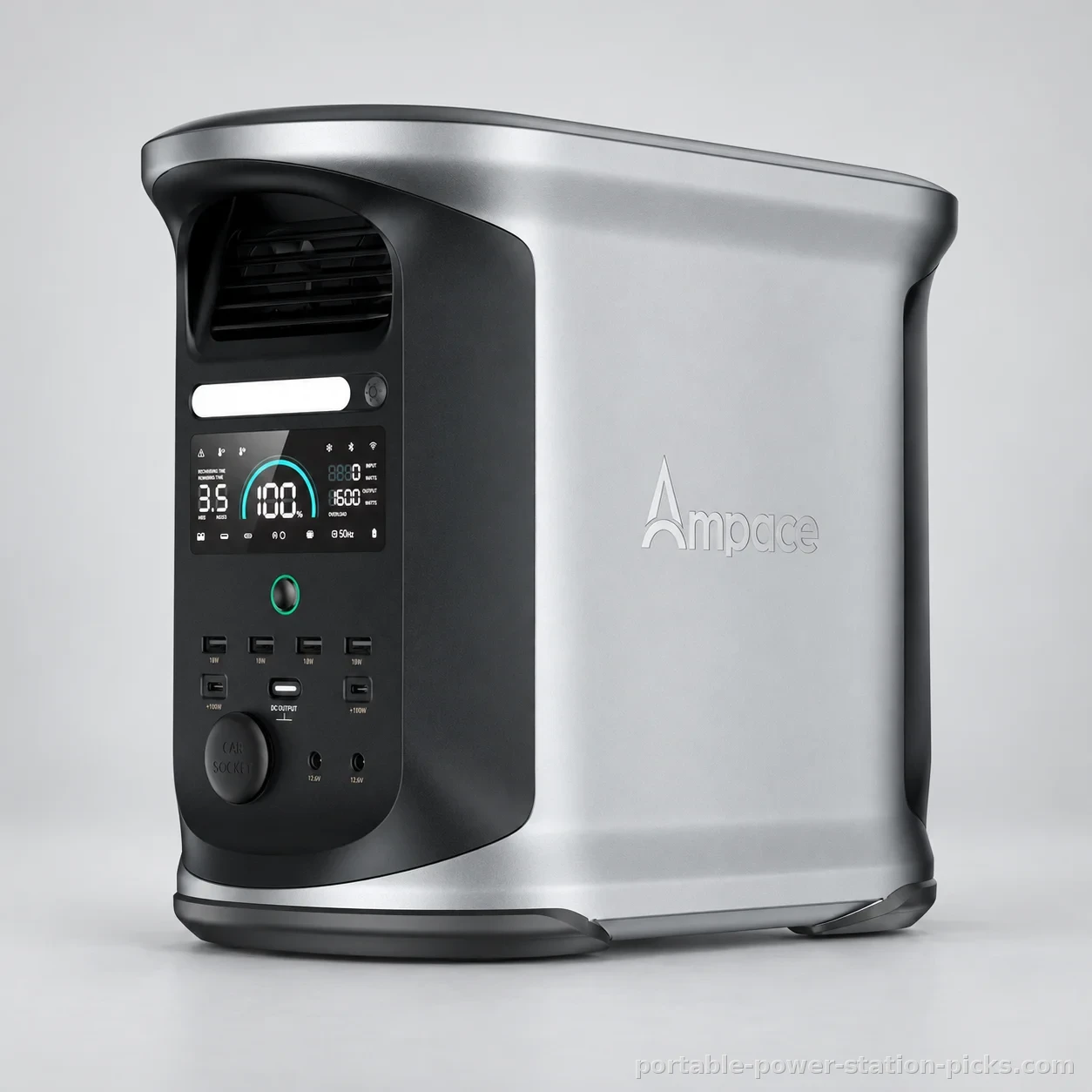
Real and AI-generated images for illustration to help you picture the product • Find more photos on the retailer's site.
Ampace Andes 1500 (portable power station designed for home backup power): our review
Brand: AmpaceOur methodology
No verified local offers at present.
 Jackery Explorer 2000 v2
8.5/10
See our pick →
Jackery Explorer 2000 v2
8.5/10
See our pick →
The short versionA promising option for planning backup power at home. We analysed its confirmed specifications, which combine high output with a substantial energy reserve. Runtime will depend on the appliances connected, while the available sockets and charging requirements need checking before you choose.
Recommended for
- Preparing for power outages
- Powering priority appliances
- Targeted home backup power
Specifications
| Rated power | 2400 W |
| Battery capacity | 1462 Wh |
| Use | Home backup |
| Battery technology | LiFePO4 |
| Peak power | 3600 W |
| Mains charging | Duration not specified |
| Maximum solar input | Not specified |
| 230 V sockets | Number not specified |
| Expansion battery | Compatibility not specified |
Pros
- 2400 W rated output
- 1462 Wh capacity
- LiFePO4 battery
- Stated peak output of 3600 W
Cons
- Shorter runtime as consumption increases
- Number of 230 V sockets undisclosed
- Mains charging time undisclosed
- Weight undisclosed
Our scores explained
Every model on the site is scored on the same criteria, using the same scale: its position among models with verified data for that specification. Last place earns 6.5, first place 9.6, and the rest are scored in proportion to their rank. Here is how this model's scores are calculated.
Two model counts: the rank and average include product pages on this site scored for the criterion; the calculation compares the model with all catalogue models whose specification is verified, with or without a product page. A score assigned at publication may remain without a verified specification, so the first count can sometimes be higher.
Rated power: 8.7/10
Ampace Andes 1500 scores 8.7/10 on this criterion. Across the 22 product pages on the site with a score for this criterion, the average is 8.3: above average, Rank 8 out of 22.
| Shared baseline: last place in the ranking | 6.5 |
|---|---|
| Rated power: 2 400 w ; 20 perform worse, 7 perform better, 3 are tied (including this model), among the 30 catalogue models with this specification verified | +2.2 |
| Rated power score | 8.7/10 |
Calculation: (20 + 3 ÷ 2) ÷ 30 = 71.67% of the ranking; 6.5 + 71.67% × 3.1 = 8.7/10, rounded to one decimal place.
Battery capacity: 8.3/10
Ampace Andes 1500 scores 8.3/10 on this criterion. Across the 22 product pages on the site with a score for this criterion, the average is 8.2: above average, Rank 12 out of 22.
| Shared baseline: last place in the ranking | 6.5 |
|---|---|
| Battery capacity: 1 462 wh ; 16 perform worse, 12 perform better, 1 are tied (including this model), among the 29 catalogue models with this specification verified | +1.8 |
| Battery capacity score | 8.3/10 |
Calculation: (16 + 1 ÷ 2) ÷ 29 = 56.9% of the ranking; 6.5 + 56.9% × 3.1 = 8.3/10, rounded to one decimal place.
Equipment: 6.6/10
Ampace Andes 1500 scores 6.6/10 on this criterion. Across the 23 product pages on the site with a score for this criterion, the average is 8: below average, Rank 22 out of 23.
| Shared baseline: last place in the ranking | 6.5 |
|---|---|
| 1 feature found out of 13 tracked: 0 perform worse, 29 perform better, 2 are tied (including this model), among the 31 catalogue models with this specification verified | +0.1 |
| Equipment score | 6.6/10 |
Calculation: (0 + 2 ÷ 2) ÷ 31 = 3.23% of the ranking; 6.5 + 3.23% × 3.1 = 6.6/10, rounded to one decimal place.
Recorded features: Battery technology (LiFePO4).
Listed in the specifications, but not confirmed by any verified source: Expansion battery. These features are not counted.
The retailer does not specify: Solar, Non-USB DC outputs, App connectivity, Built-in transport features. These features are not counted.
The retailer does not specify “Weight”: this criterion earns no points and is excluded from the overall score.
The retailer does not specify “Number of 230 V sockets”: this criterion earns no points and is excluded from the overall score.
Overall score: 7.9/10, the average of the 3 scores above.
For your home backup needs
You want to prepare your home for outages by identifying which appliances need priority power. You know their consumption and are willing to adjust their operation to the available energy reserve. The Andes 1500 fits this approach, provided you confirm the sockets and charging requirements needed for your plans.
The Ampace Andes 1500 is designed for home backup power, with an energy reserve intended to keep appliances running during an outage. Its 2400 W rated output and 1462 Wh LiFePO4 battery are its main strengths, but several practical specifications remain undisclosed.
1What can the 2400 W rated output and 3600 W peak output handle?
+
The rated output of the Andes 1500 indicates the stated power available to run connected appliances. When planning your home backup power, add up the requirements of the equipment you want to run simultaneously. This total must stay within the 2400 W rated output, while also accounting for each appliance’s startup requirements.
The manufacturer states a peak output of 3600 W. This is not continuously available power, and its duration is undisclosed. It therefore cannot, on its own, guarantee that a particular appliance will start. Check the appliance’s electrical requirements and the conditions specified in the documentation. The number of 230 V sockets is also undisclosed, a key consideration when planning connections.
2The Andes 1500’s 1462 Wh capacity needs to match your backup requirements
+
Capacity indicates the energy reserve, rather than directly telling you how many hours your home can be powered. The theoretical calculation involves dividing the capacity in Wh by total consumption in W. However, this does not account for conversion losses or the power station’s own consumption. Actual runtime therefore cannot be stated from this specification alone.
To choose, identify your priority appliances and their consumption, then determine how long you need backup power. The battery uses LiFePO4 cells, but no cycle count or remaining capacity threshold is disclosed. Mains charging time and support for an expansion battery are also undisclosed. These details affect preparations for a prolonged outage or closely spaced outages.
3Which alternative should you compare with the Andes 1500 and its 2400 W output and 1462 Wh capacity?
+
A suitable alternative should meet the same home backup needs. Compare rated output, which determines which appliances can run simultaneously, separately from capacity, which affects runtime. A competing model exceeding 2400 W but offering less than 1462 Wh would favour output over energy reserves. Conversely, greater capacity would not be enough if its output could not support your appliances.
We do not name a competing model without verified specifications that allow a reliable numerical comparison. To choose between the models you are considering, also ask about weight, available sockets and charging time. These details remain undisclosed for the Andes 1500 among its confirmed specifications. A lack of confirmation does not mean that the corresponding features are absent.
Our final verdict on Ampace Andes 1500
The Andes 1500 is worth considering if you need an energy reserve for priority appliances during an outage. Your choice should start with their consumption and the backup duration you need, rather than the stated maximum output alone.
Worth noting
Its main limitation is a finite energy reserve, which drains faster as consumption increases. It therefore does not guarantee prolonged power for your entire home. Also check connections and charging options before incorporating it into your backup plans.
Our verdict:
Our analysis highlights convincing output and capacity, with a more measured assessment of its features. The Andes 1500 is a credible home backup option, provided you confirm the practical specifications your setup requires.
This portable power station features in

Analysis by Romain Brunel
Founder of Portable Power Station Picks
I analyse publicly available portable power station specifications and buyer reviews to explain the differences between models. I distinguish stated specifications from estimates, paying particular attention to power output, runtime and charging compatibility.
Updated on October 16, 2026
Frequently asked questions
How do you determine which appliances can run simultaneously?
Add up their running power requirements and compare the total with the 2400 W rated output. Also check their startup requirements and connection compatibility. The stated peak output alone does not guarantee that an appliance is compatible.
How can you estimate runtime?
Divide 1462 Wh by the total power consumption of your devices in W to get a theoretical runtime in hours. Actual runtime will be shorter, partly due to conversion losses and the power station’s own consumption. Devices with variable power consumption require an adjusted estimate.
Can it deliver 3600 W continuously?
No, this figure is the stated peak power. The rated power is 2400 W. Since the permitted peak duration is not specified, do not use this figure to size your continuous power supply.
Can it power the whole home during an outage?
Its focus on home backup does not guarantee that it can power the entire home. The combined power requirements and energy consumption of your appliances determine what it can power and for how long. Prioritise a group of essential devices whose requirements you have checked.
What does LiFePO4 mean?
It refers to a lithium iron phosphate battery. This technology is confirmed for the Andes 1500, but it does not establish a precise cycle count or a guaranteed lifespan for this model.
Ampace Andes 1500
Pros
- 2400 W rated output
- 1462 Wh capacity
- LiFePO4 battery
- Stated peak output of 3600 W
Worth knowing first
- Shorter runtime as consumption increases
- Number of 230 V sockets undisclosed
- Mains charging time undisclosed
- Weight undisclosed
Compare with another model
Explore our other analyses
FlashFish E200
Overall rating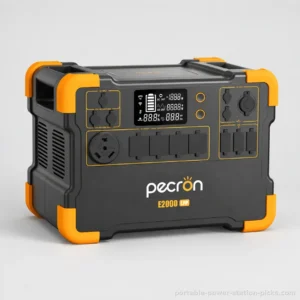
PECRON E2000LFP
Overall rating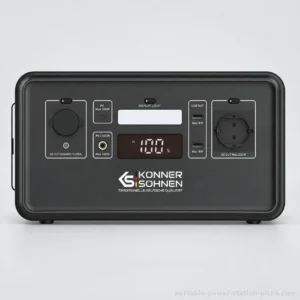
Könner & Söhnen KS 500PS
Overall rating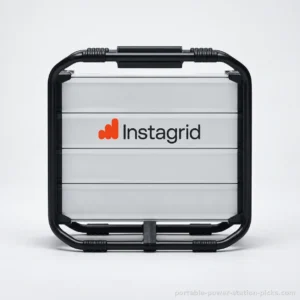
Instagrid ONE
Overall rating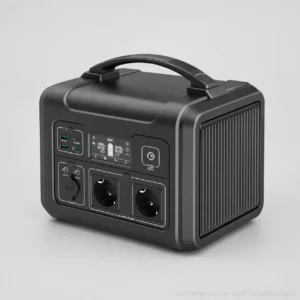
EZVIZ PS600
Overall rating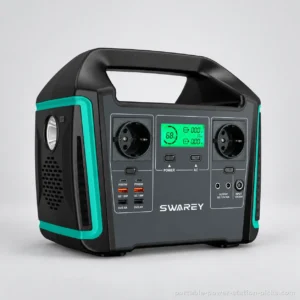
SWAREY S1000
Overall rating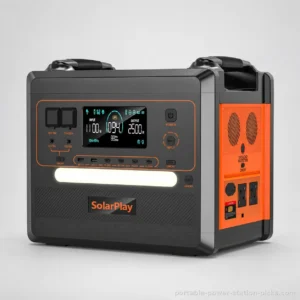
SolarPlay Q2402M
Overall rating
Have a question about this model?