Choose your portable power station based on your actual needs
Compare capacity, power output and charging options to power your devices on the go or during a power cut.
Portable power station: which model should you choose?
The 6 criteria that set portable power stations apart, in the order to consider them, each with a guide backed by figures.
Our top three
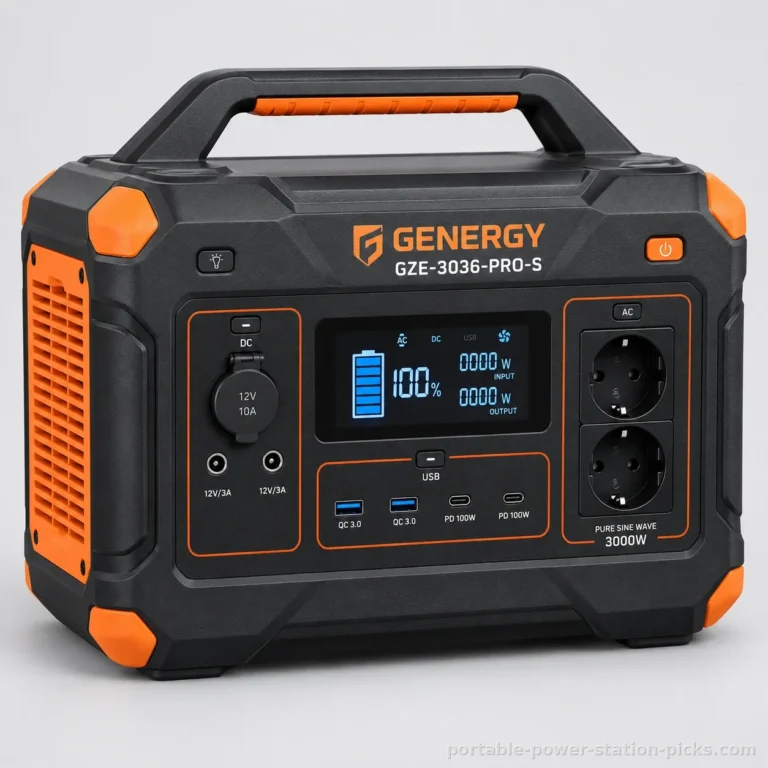
GENERGY GZE-3036-PRO-S
Our latest reviews of the best portable power stations
Every model is compared on what really matters: overall score, actual price, pros and cons.

BLUETTI AC180
Overall rating

FOSSIBOT F2400
Overall rating
ALLPOWERS R600
Overall rating
Xtorm XP2W300
Overall rating
Our guides and reviews to help you choose your portable power station

How to use and configure your portable power station
Learn to choose the right outputs, adjust charging and standby settings, and monitor your portable power station’s runtime based on your daily needs.
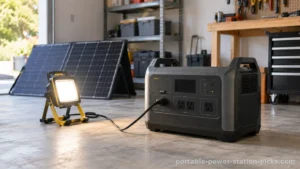
Which 3000 W portable power station suits your needs
Specifications explained to help you choose
Portable Power Station Picks compares models using their technical specifications, public documents and buyer reviews. We explain what their capabilities could support when camping, travelling by vehicle or providing backup power.
Our analyses distinguish stored energy, expressed in watt-hours, from available power, expressed in watts. We also examine outlets, weight, battery technology and charging requirements to help you select a power station suited to your devices.
More about us →


What capacity and power output do your devices need?
Capacity in watt-hours indicates how much energy is stored, but not all of that energy is available at the outlets. Runtime depends on the devices’ power consumption, conversion losses and the power station’s own consumption. Also check the continuous power output of the AC outlets and the peak power output, which is useful for some motor-driven appliances that need more power to start.
Your choice also depends on charging options and transport. For solar panels, check the accepted voltage range, maximum current, permitted input power and connectors. For mobile use, consider weight and dimensions. Battery chemistry, the stated conditions for cycle life and whether the outputs work while charging also deserve attention.
Our reviews are independent: no brand pays for its ranking. To learn more, exploreOur methodology detailed and who we are. You can also browse our full portable power stations comparison.