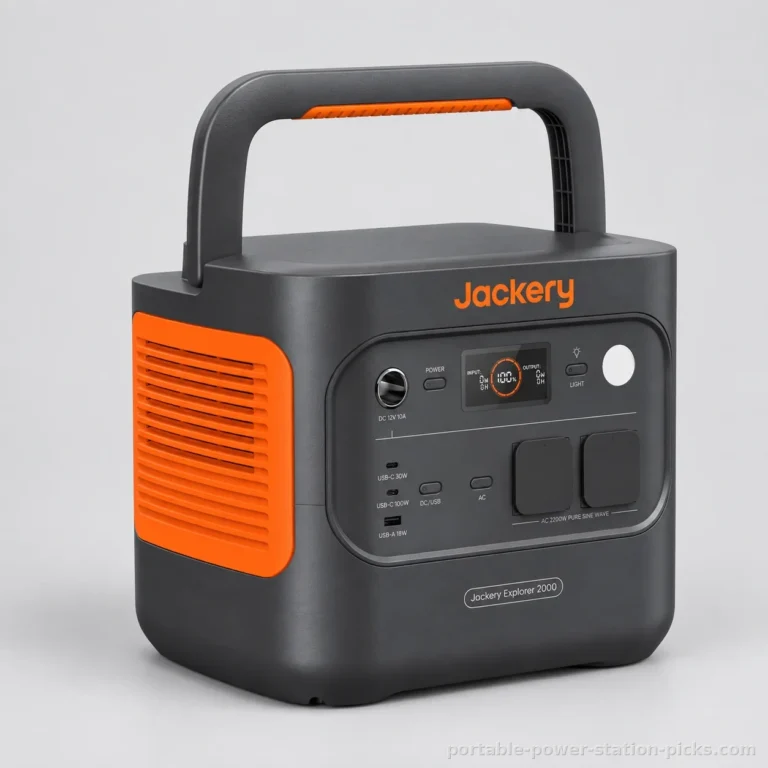
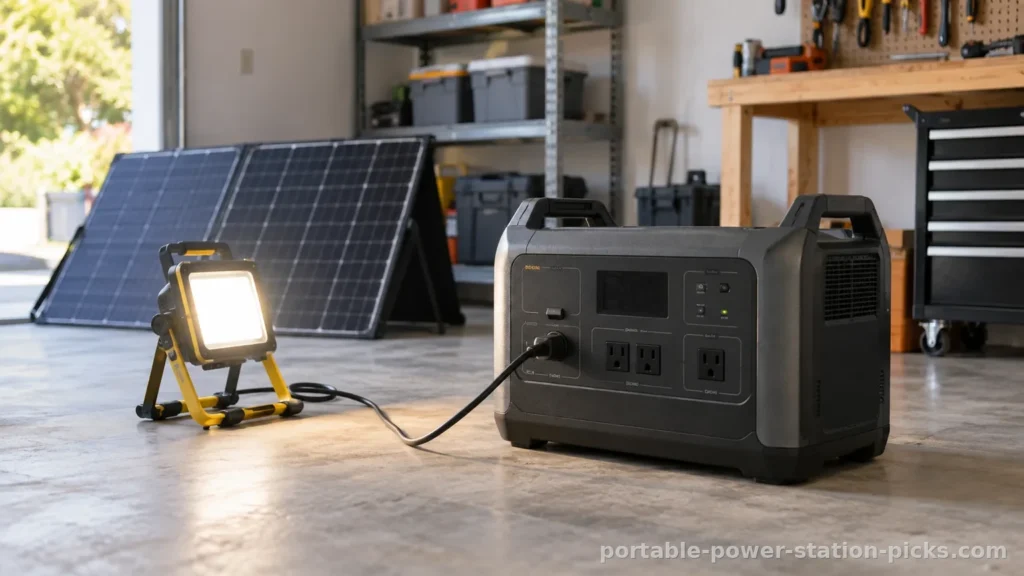
A 3000 W portable power station can power several appliances simultaneously or a power-hungry device, provided their combined power draw and startup requirements stay within its limits. When choosing, focus on continuous output and capacity in Wh, which determines runtime. Our comparison distinguishes models rated at 3000 W from alternatives appearing in search results.
Contents
- Which portable power stations should you compare around 3000 W?
- AFERIY Haven3000 P300 for gradually expanding storage capacity
- VEVOR and SucceBuy for their stated capacity of 3072 Wh
- ECOFLOW DELTA Pro for a broader comparison
- What can a 3000 W portable power station power?
- Check continuous output before peak output
- Match your usage to your available energy
- What runtime can you expect from 2048 or 3072 Wh?
- Use a power consumption figure that reflects your usage
- How should you compare batteries and charging options?
- LiFePO4 technology alone is not enough to distinguish between models
- Mains charging should fit your schedule
- Solar panels must stay within the electrical limits
- What details should you check before buying?
- How we use the available information to select models
- Frequently asked questions about 3000 W portable power stations
- What is the best 3000 W portable power station?
- Can a 3000 W power station power an entire home?
- Can it replace an uninterruptible power supply for a computer?
- Can you recharge the power station in a vehicle?
- Should you choose a power station with 3000 W output or 3000 Wh capacity?
- Does a portable power station produce exhaust fumes?
For home backup, a motorhome or work without access to mains power, your choice also depends on charging, transport and after-sales service. A large energy reserve cannot make up for insufficient output, and a powerful station can drain quickly.
Which portable power stations should you compare around 3000 W?
Search results mix standalone power stations, solar panel bundles and models with different power outputs. The specifications below come from the documentation provided. They help narrow down the options but are not enough to rank products by reliability, noise or actual efficiency.
| Model | Stated power output | Stated capacity | Deciding factor |
|---|---|---|---|
| AFERIY Haven3000 P300 | 3000 W | 2048 to 10240 Wh depending on the configuration | Check which expansion batteries are included |
| VEVOR | 3000 W | 3072 Wh | Identify the exact model and its manual |
| SucceBuy | 3000 W | 3072 Wh | Compare what each offer includes |
| ECOFLOW DELTA Pro | To be confirmed in the model specifications | 3600 Wh | Check the power output and transport requirements |
AFERIY Haven3000 P300 for gradually expanding storage capacity
The P300 is listed with a power output of 3000 W and an expandable capacity of 2048 to 10240 Wh. It is worth comparing if you want to start with the power station alone, then add storage as your needs grow.
The maximum advertised capacity requires a configuration with expansion batteries. Check which batteries are compatible, how many are needed and the total cost. An expansion battery increases runtime but does not automatically let you connect more powerful appliances.
VEVOR and SucceBuy for their advertised capacity of 3072 Wh
The offers identified advertise 3000 W of power output and 3072 Wh of storage. This nominal capacity exceeds that of the P300 without expansion batteries. It is an option to consider if you want more energy in the initial configuration.
Similar specifications do not, however, prove that these power stations are identical. Compare the model reference, connection options, manual and seller. Some SucceBuy offers include solar panels. Their value depends on compatibility and whether you can install them in sunlight.
ECOFLOW DELTA Pro to broaden the comparison
A comparison result lists the DELTA Pro with 3600 Wh, an LFP battery and a weight of 45 kg. This weight deserves attention if you regularly need to load the power station into a vehicle or carry it on stairs.
Its inclusion in a selection of 3000 W power stations does not confirm its exact power output. Check the version being sold and its documentation before comparing it with the models in the table.
What can a 3000 W portable power station power?
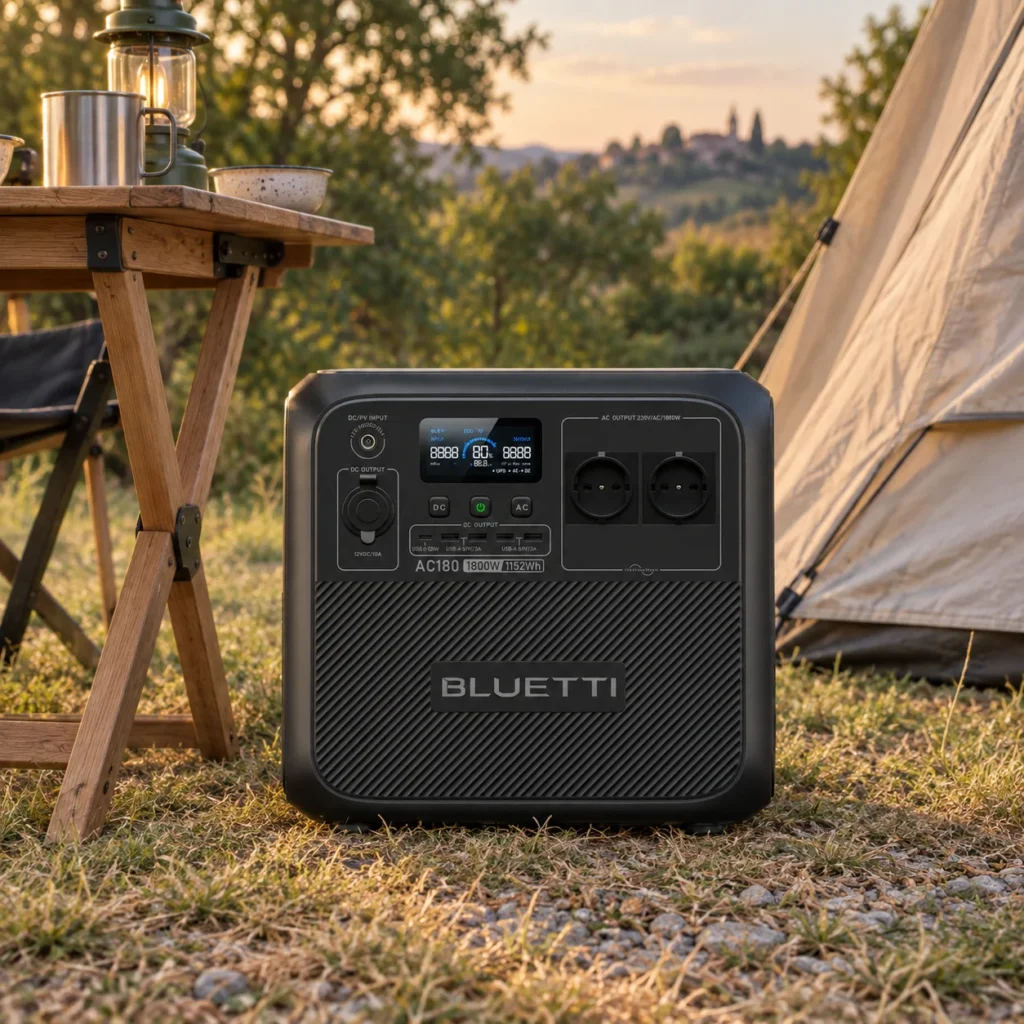
It may be suitable for a refrigerator, a computer, lighting, certain tools or cooking appliances. Compatibility depends on power draw, startup surges and output limits. The appliance name alone is not enough.
Check continuous power before peak power
The 3000 W must refer to the continuous power available from the AC outputs. Peak power meets a temporary need, particularly when a motor or compressor starts. How long it can be sustained matters as much as its rating.
- Add up the power requirements of equipment used simultaneously.
- Check the power draw on rating plates or in manuals.
- Check the limits for each socket and those shared across outputs.
- Check the startup requirements of motor-driven appliances.
A mode that allows you to exceed the rated power may have restrictions. Check how it works and which appliances are supported. Also check the type of current supplied by the inverter, particularly whether a pure sine wave is specified when your equipment requires it.
Match your usage to your energy reserve
At home, prioritise essential equipment during an outage. In a motorhome, distinguish between ongoing needs and occasional use. For DIY, check each tool and any equipment that will run alongside it.
A hob, kettle or heater can place heavy demands on the battery. They may operate within the available power while significantly reducing runtime. For prolonged heating, power alone is therefore not enough to determine the size of the system you need.
What runtime can you expect with 2048 or 3072 Wh?
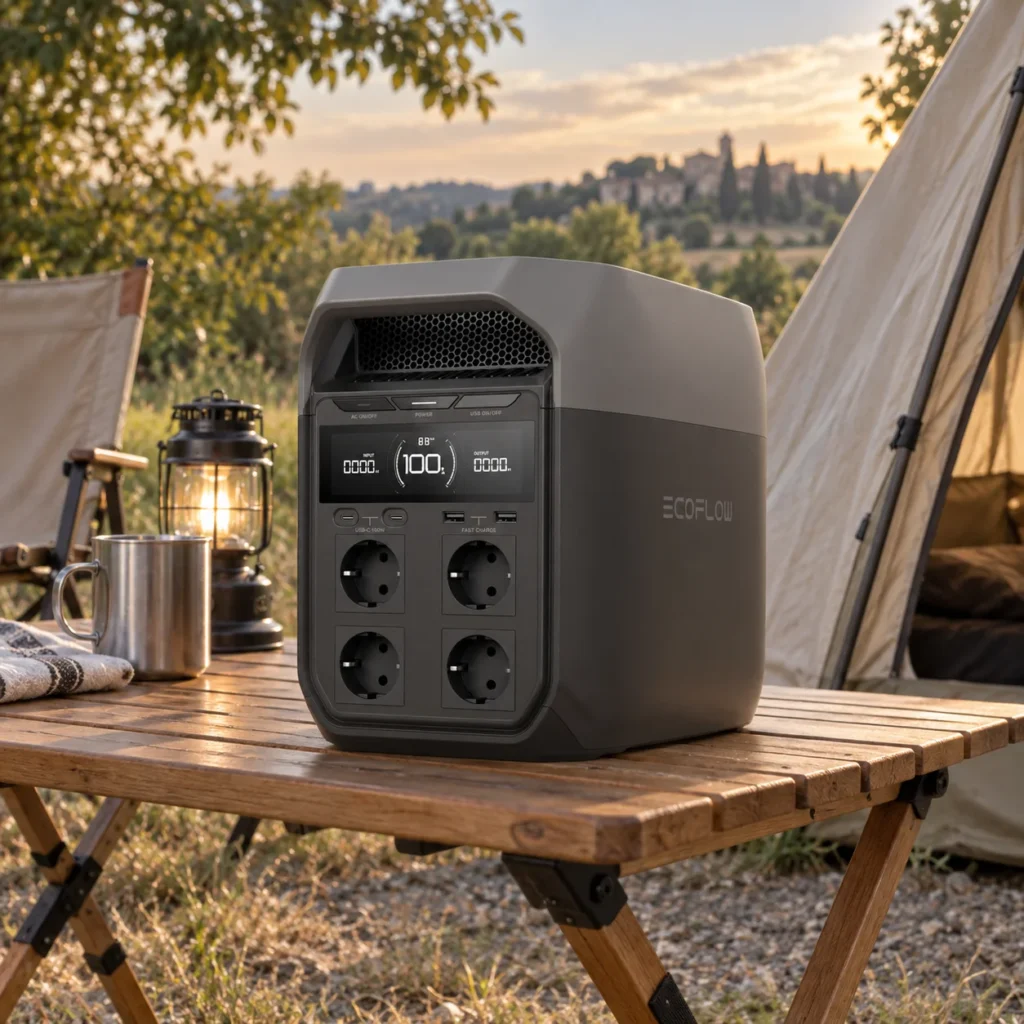
Theoretical runtime is calculated by dividing capacity in Wh by power consumption in W. Watts describe instantaneous power, while watt-hours represent a quantity of energy. A 3000 W power station therefore does not necessarily have a 3000 Wh battery.
| Rated capacity | Assumed constant power consumption | Theoretical runtime before losses |
|---|---|---|
| 2048 Wh | 3000 W | Approximately 41 minutes |
| 3072 Wh | 3000 W | Approximately 61 minutes |
These runtimes are calculated from the stated capacities. They are not measured runtimes. Conversion losses, the power station’s own consumption and the reserve retained by its management system reduce the energy available at the sockets.
Use a power consumption figure that reflects your usage
A refrigerator cycles on and off. Its instantaneous power draw therefore does not reflect its average consumption. Measuring energy consumption with a power meter over a representative period will be more useful for estimating runtime.
If your devices run correctly but not for long enough, look for more Wh. If they exceed the power limit, increasing storage capacity alone will generally not solve the problem.
How do you compare batteries and charging options?
LiFePO4 technology alone is not enough to distinguish between models
LiFePO4 and LFP refer to the same battery chemistry, lithium iron phosphate. This is a relevant feature, but it does not, on its own, mean a power station is better.
Compare the conditions behind the stated cycle life, the remaining capacity threshold used and the permitted temperatures. Check the warranty too. A battery’s stated lifespan does not guarantee the lifespan of the electronics or inverter.
Mains charging needs to fit your schedule
Check the stated charging time and the conditions used to calculate it. A partial charge cannot be compared directly with a full charge. Adjustable charging power can be useful when the available socket imposes a limit.
Also check whether the power station can power your devices while charging, what restrictions apply and how much power is available. Do not assume it can do both simply because it has a mains connection.
Solar panels must stay within the electrical limits
The 3000 W output does not represent the supported solar input power. To choose panels, check the specifications of the solar input and the MPPT controller, where fitted.
- The operating voltage range.
- The maximum permissible voltage.
- The maximum supported current.
- The maximum solar input power and permitted connections.
A compatible connector is not enough. Wiring panels in series or parallel changes the electrical characteristics of the array. Panel voltage can also increase in cold weather. Follow the configurations specified by the manufacturer.
The term “solar generator” can refer to a power station paired with panels, which are sometimes sold separately. Generation then depends on sunlight, orientation and shading. A panel does not constantly deliver its rated power.
What details should you check before buying?
Compare the cost of the setup you actually need. A standalone power station, a power station with an additional battery and a solar kit meet different needs. Without dated prices and equivalent offers, a ranking by cost would be misleading.
- Weight, dimensions and access to the intended storage space.
- Handles, wheels and ease of loading.
- The number of mains sockets, USB outputs and direct current outputs.
- The cables, adapters and panels actually included.
- The warranty, return terms and support in the event of a fault.
For use in an occupied room, look for feedback on fan noise that specifies the load conditions. A comment on noise at idle does not describe how the unit behaves at high power. Maintain the specified ventilation clearances and follow the operating requirements regarding moisture.
How our selection uses the available information
This desk-based analysis draws on the specifications and excerpts from sales materials provided. No sufficiently detailed collection of customer reviews is available here to establish a consensus on reliability or after-sales service.
To round out the comparison, prioritise feedback on the same model that specifies how long it has been used and describes its uses. An average rating alone cannot reveal the causes of problems or how often they occur.
Frequently asked questions about 3000 W portable power stations
What is the best 3000 W portable power station?
The choice depends on your runtime and portability needs. The P300 is worth comparing for its expandable storage. The VEVOR and SucceBuy options advertise a higher starting capacity. The available information is insufficient to name a winner for reliability or real-world performance.
Can a 3000 W power station power an entire house?
It can power a selection of compatible devices, but may not support everything running at once. Never connect its output to a wall socket to power your home. Connecting it to fixed circuits requires suitable equipment installed by a professional.
Can it replace an uninterruptible power supply for a computer?
Check the switchover time and the computer’s requirements. An advertised backup function does not guarantee uninterrupted power for every device. Consult the manual before relying on this function to protect work in progress.
Can the power station be charged in a vehicle?
This depends on compatible inputs and accessories. Check the supported input power and the limits of the vehicle’s socket. Charging may be technically possible but too slow to replenish your reserve between 2 uses.
Should you choose a 3000 W power station or a capacity of 3000 Wh?
These are 2 complementary criteria. Power in W determines which appliances can run together. Capacity in Wh determines how long they can run. Start by calculating your power requirements, then size the storage for your desired runtime.
Does a portable power station produce exhaust gases?
A battery-powered station does not produce exhaust gases during operation, unlike a fuel-powered generator. However, it must still be kept within the temperature and ventilation conditions specified in its manual.
Was this article helpful?
0% of readers found it useful (0 reviews)